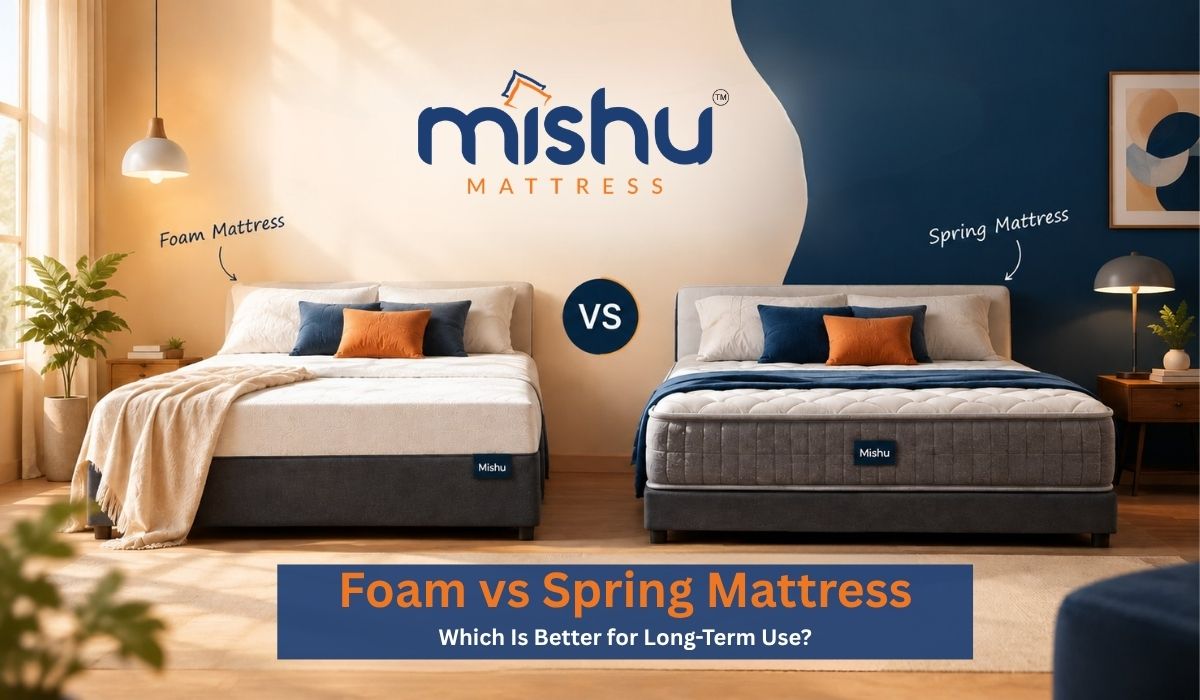
Foam vs Spring Mattress: Which Is Better for Long-Term Use?
Choosing a mattress is not just about how soft or firm it feels when you lie down for five minutes. A good mattress should support your body, remain comfortable over time, suit your sleeping style, and offer value for your budget. That is why the foam mattress vs spring mattress debate continues to matter for shoppers.
Both options can provide excellent sleep, but they feel and perform differently. A foam mattress generally offers pressure relief and a closer, more cushioned feel, while a spring mattress provides more bounce, airflow, and responsive support.
So, which is better for long-term use? The answer depends on your body, sleeping position, comfort preference, room temperature, and the quality of the mattress itself.
What’s the Difference Between Foam and Spring Mattresses?
The simplest difference is in the support system.
A foam mattress is made primarily from foam layers. Depending on the construction, it may use high-density foam, memory foam, gel foam, or other comfort materials. A memory foam mattress, for example, is designed to respond to body weight and create a more contouring feel.
A spring mattress uses metal coils as its primary support structure. Traditional springs can provide a more bouncy feel, while pocket springs work more independently and can offer better motion isolation.
In simple terms:
- Foam: cushioning, contouring, and pressure relief
- Spring: bounce, responsiveness, and airflow
- Memory foam: closer body contouring and motion isolation
- Pocket springs: individual support with reduced movement transfer
The right choice depends less on the label and more on the construction and quality.
Which One Will Stay Comfortable for Longer?
Durability depends on material quality, construction, usage, body weight, and maintenance—not simply whether the mattress is foam or spring.
A well-made foam mattress can retain its comfort for years when it uses quality materials and is properly maintained. Similarly, a quality spring mattress can provide reliable support over a long period.
When comparing foam vs spring mattress options, look for strong construction, suitable density or coil quality, good edge support where applicable, and a design that matches your everyday needs.
For long-term value, choosing the cheapest option may not always be the best decision. Comfort that changes significantly after a short period can make a low initial price less attractive.
Which Mattress Gives Better Back and Body Support?
Neither foam nor spring automatically wins for everyone.
Foam can distribute body weight across the sleeping surface and reduce pressure around areas such as the shoulders and hips. This can be particularly comfortable for people who prefer a cushioned sleeping surface.
A spring mattress, meanwhile, can provide responsive support and make changing positions easier.
For shoppers prioritizing balanced support, an option such as Mishu Mattress's OrthoCloud can be considered as part of the selection process. The important point is to choose support based on your individual comfort requirements rather than assuming that “firmer” always means “better for your back.”
How Does Memory Foam Compare with a Spring Mattress?
A memory foam mattress typically feels more contouring. It responds to pressure and allows the body to settle into the comfort layer. This can be useful for sleepers who enjoy a snug, cushioned sensation.
A spring mattress feels more responsive. You are likely to notice more bounce when moving or changing sleeping positions.
If you prefer a body-hugging feel and good motion isolation, foam may be the better fit. If you prefer a lively surface with easier movement and greater airflow, springs may suit you better.
Which Mattress Feels Cooler During Hot Nights?
Temperature is an important consideration, particularly in warmer Indian climates.
Traditional spring constructions generally allow more air to move through the mattress because of the open space around the coils. Some foam mattresses can retain more body heat, although modern foam designs may include cooling materials, ventilation, or gel-infused layers.
Therefore, when comparing a foam mattress with a spring mattress, don't judge cooling performance by material alone. Look at the complete construction, cover, ventilation, and room conditions.
What Should Couples Consider When Choosing a Mattress?
For couples, two factors matter especially: motion isolation and responsiveness.
Foam mattresses generally absorb movement well, which can be useful when one person changes position during the night. Spring mattresses can provide more bounce, although individually wrapped pocket springs can also help limit movement transfer.
Size matters too. If two people share the bed, a spring mattress double bed or spring mattress queen size can provide a more suitable sleeping surface than a smaller option.
The best mattress for couples is ultimately one that balances both sleepers' comfort preferences.
Does a Higher Mattress Price Always Mean Better Quality?
Not necessarily.
The foam mattress price and spring mattress price can vary considerably depending on materials, thickness, construction, brand, and features. A premium price does not automatically guarantee that the mattress is right for you.
Instead of comparing prices alone, compare what you receive for that price.
Think about:
- Material and construction quality
- Comfort and firmness
- Support requirements
- Mattress thickness
- Expected durability
- Warranty and after-sales support
- Size and sleeping needs
This approach helps you judge value rather than simply choosing the most expensive or cheapest mattress.
Which Mattress Works Best for Your Sleeping Position?
Your sleeping position can make the decision much easier.
Side sleepers often prefer cushioning that reduces pressure around the shoulders and hips, making a suitable foam or memory foam mattress an attractive option.
Back sleepers usually benefit from balanced support that keeps the body comfortably aligned without feeling excessively hard.
Stomach sleepers often prefer a more supportive surface that prevents excessive sinking.
If you are buying a single bed foam mattress, spring mattress single bed, or a larger size, consider the sleeper's position and comfort preference before choosing the material.
How Should You Care for Your Mattress to Make It Last?
Good maintenance can help preserve mattress comfort.
Use a suitable mattress protector, keep the sleeping surface clean, allow the mattress to ventilate when possible, and follow the manufacturer's care instructions. Avoid placing excessive weight or repeatedly sitting on the same edge unless the mattress is designed for it.
For foam and spring mattresses alike, proper care can help protect the materials and keep the sleeping surface comfortable for longer.
Which Mishu Mattress Is Right for You: Foam or Spring?
There is no single answer to the foam mattress vs spring mattress question because different sleepers want different things.
If you prefer contouring comfort and pressure relief, explore Mishu's foam and memory foam options, including the Hypnotic Mattress.
If you prefer responsive support and a spring-based feel, Mishu's spring and pocket-spring options may be more suitable, depending on your comfort requirements.
The best choice is the mattress that gives you the right combination of comfort, support, size, construction, and long-term value.
Conclusion
So, which is better: a foam mattress or a spring mattress?
A foam mattress can be an excellent choice if you value cushioning, pressure relief, and motion isolation. A spring mattress can be a better fit if you prefer bounce, responsiveness, and airflow.
There is no universal winner. Your sleeping position, comfort preference, climate, body support needs, partner's movement, and budget should guide the decision.
Before buying, compare the construction—not just the price. With the right choice, your mattress can become a long-term investment in better, more comfortable sleep.
Frequently Asked Questions (FAQs)
A foam mattress can be better for sleepers who prefer pressure relief, cushioning, and motion isolation. A spring mattress may be better for those who prefer bounce, airflow, and responsive support.
Both foam and spring mattresses can last for years when they are made with quality materials and properly maintained. Durability depends more on construction, material quality, usage, and care than the mattress type alone.
Yes. A quality memory foam mattress can provide comfortable, contouring support over the long term when its materials and construction are suitable for the sleeper and it is properly maintained.
Foam generally offers strong motion isolation, while spring mattresses provide more bounce. Pocket-spring designs can offer a balance of individual support and reduced movement transfer, making them worth considering for couples.
Spring mattresses typically allow more airflow around the coils, while some foam mattresses may retain more heat. However, cooling depends on the mattress's complete construction, including ventilation and cooling materials.
Consider your sleeping position, preferred firmness, body support needs, temperature preference, whether you share the bed, mattress size, and budget. Testing different comfort feels can also help you make a more confident decision.