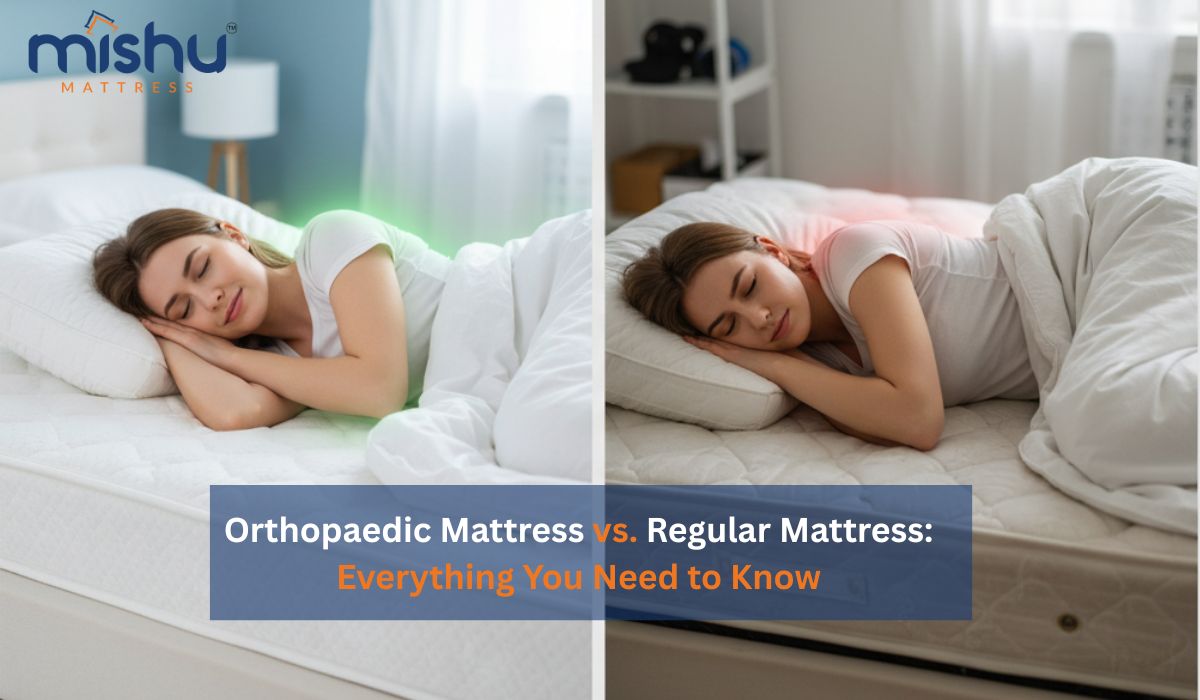
Orthopaedic Mattress vs. Regular Mattress: Everything You Need to Know
Choosing the right mattress can significantly impact your sleep quality, posture, and overall health. While a regular mattress might seem sufficient for everyday use, an orthopaedic mattress is designed to support your spine and relieve pressure points. In this blog, we’ll explore the differences between orthopaedic and regular mattresses, their benefits, limitations, and tips to make the right choice for your comfort and well-being.
What Is an Orthopaedic Mattress?
An orthopaedic mattress is specifically designed to support the natural alignment of your spine. These mattresses use high-density foam, memory foam, or hybrid designs to evenly distribute body weight, reduce pressure points, and relieve joint pain. Orthopaedic mattresses are often recommended by doctors for individuals suffering from back pain, arthritis, or posture-related issues.
Key features include:
- Firm support for spine alignment
- Pressure point relief for shoulders, hips, and lower back
- Durable materials that maintain shape over time
- Designed to improve sleep quality and reduce aches
What Is a Regular Mattress?
A regular mattress typically refers to standard spring, foam, or cotton-filled mattresses. While these mattresses provide basic comfort, they may not offer adequate support for spinal alignment or joint relief. Regular mattresses vary widely in terms of quality, firmness, and durability. They are usually more affordable but may wear out faster and fail to address specific health needs.
Common characteristics of regular mattresses:
- Variety of materials: springs, foam, or cotton
- Soft to medium firmness levels
- Less targeted support for pressure points
- Shorter lifespan compared to high-quality orthopaedic mattresses
Key Differences Between Orthopaedic & Regular Mattresses
|
Feature |
Orthopaedic Mattress |
Regular Mattress |
|
Support |
High-density support, maintains spine alignment |
Moderate support, may sag over time |
|
Comfort |
Firm but pressure-relieving |
Soft to medium comfort, less targeted support |
|
Durability |
7–10 years or more with proper care |
4–6 years depending on quality |
|
Pain Relief |
Designed for back, joint, and posture support |
Limited or no specific pain relief |
|
Price |
Higher upfront cost |
Generally lower cost |
|
Recommended For |
People with back pain, posture issues, seniors |
General use, occasional sleepers |
Benefits of Orthopaedic Mattresses
- Back Pain Relief: By maintaining spinal alignment, orthopaedic mattresses reduce stress on the back and promote natural posture.
- Joint Pressure Relief: High-density foam and supportive layers alleviate pressure on hips, shoulders, and knees.
- Improved Sleep Quality: Reduced tossing and turning leads to deeper, more restful sleep.
- Long-Term Durability: Quality orthopaedic mattresses maintain their shape longer, providing consistent support for years.
- Doctor Recommended: Often prescribed for individuals recovering from injury or with chronic conditions like arthritis.
Limitations of Regular Mattresses
While regular mattresses can be comfortable for short-term use, they have some drawbacks:
- Sagging Over Time: Springs or low-density foam may lose shape, causing discomfort.
- Limited Support: Uneven distribution of body weight can lead to back or joint pain.
- Shorter Lifespan: Regular mattresses may need replacement every 4–6 years.
- Not Ideal for Health Issues: People with chronic back pain or posture problems may not get the required support.
Which One Should You Choose?
The choice depends on your health needs, sleeping style, and budget:
- Choose an Orthopaedic Mattress if:
- You have back pain or posture issues
- You want long-term durability and support
- You sleep on your back or side frequently
- Choose a Regular Mattress if:
- You are young and healthy with no spinal issues
- You prioritize cost over long-term support
- You need a mattress for occasional use
Orthopaedic Mattress – Long-Term Value
Although orthopaedic mattresses are generally more expensive, their long-term value outweighs the cost. A high-quality mattress reduces medical issues related to poor sleep posture, minimizes discomfort, and lasts longer than regular mattresses. Investing in an orthopaedic mattress is an investment in your health and quality of life.
Why Mishu Mattress Orthopaedic Range Stands Out
Mishu Mattress offers premium orthopaedic mattresses that combine comfort, support, and durability. With advanced high-density foam, ergonomic design, and doctor-recommended support, Mishu mattresses cater to people who want healthy sleep and long-lasting quality.
Highlights:
- Supports proper spinal alignment
- Reduces pressure on joints and muscles
- Available in multiple sizes and firmness levels
- Warranty and quality assurance
Make the switch today and experience the difference in sleep quality and overall wellness.
Conclusion
Choosing the right mattress is crucial for better sleep, pain relief, and long-term health. Orthopaedic mattresses provide targeted support, durability, and comfort, making them ideal for anyone looking to improve sleep quality and back health.
Explore the Mishu Mattress products today and enjoy unmatched comfort, support, and durability for a healthier sleep. Your best night’s rest starts here!
Shop online: mishumattress.com
Frequently Asked Questions (FAQs)
An orthopaedic mattress is designed to support spinal alignment and relieve pressure points, while a regular mattress offers basic comfort without targeted support.
It’s ideal for people with back pain, posture issues, arthritis, or anyone seeking long-term support and durability
With proper care, orthopaedic mattresses last 7–10 years, whereas regular mattresses typically last 4–6 years.
Mishu Mattress offers premium-quality orthopaedic mattresses in Bhavnagar, crafted with high-density foam, ergonomic design, and doctor-recommended support for long-lasting comfort.

